Measure
Measure climate risk
We quantify how climate hazards affect people, communities, infrastructure, and economic opportunity.

Building climate resilience through dispassionate, data-driven, decision-relevant analysis
The Center for Climate Resilience at the University of Pennsylvania advances the science and practice of climate adaptation and resilience. Our goal is simple: inform the development of scalable, evidence-based climate resilience solutions by catalyzing groundbreaking research and bringing together world-class researchers and policy, community, and industry partners.
The world is warming rapidly, and climate change exhibits enormous systemic inertia. Even if global emissions ceased immediately, significant warming would persist for decades. This warming is already causing significant impacts on human flourishing, whether through disrupted learning, deteriorating health outcomes, or reduced economic livelihoods.
The evidence suggests the need for a two-pronged strategy: aggressive emissions reduction to prevent catastrophic outcomes, alongside strategic investments in climate resilience and adaptation.
Beyond the political headlines around climate, there is an urgent and often overlooked need to develop climate resilience: the ability to prepare for, respond to, and recover from inevitable climate-related events like droughts and floods. Climate resilience is like a healthy immune system that can fend off disease. It takes global warming and its consequences in the near-term as a given and asks how we can prepare our homes, health, and livelihoods to minimize harm and maximize restoration of functioning.
Social systems and public policies can either act as shock absorbers or shock amplifiers in a warming world. Strategic interventions such as early-warning systems, urban heat mitigation, and upgraded public infrastructure might reduce the health and productivity impacts of extreme heat, while inadequate power grids, misaligned incentives, and insufficient insurance coverage can transform manageable weather events into systemic failures with cascading economic losses.
Our approach centers on the often-overlooked social, economic, and psychological dimensions of climate adaptation and resilience, particularly those where, due to behavioral or market failures, private actors may not be expected to adapt fully on their own. Our work applies rigorous evidence-based methodologies to test, design, and scale interventions that address the human elements of climate preparedness.
CCR advances evidence-based climate adaptation by measuring climate risks, testing practical interventions, and helping institutions act on the best available research.
Our work moves from diagnosis to evaluation to implementation — connecting rigorous research with the decisions that shape climate resilience.
We quantify how climate hazards affect people, communities, infrastructure, and economic opportunity.
We study which policies, investments, and institutional responses reduce harm from climate shocks.
We partner with governments, nonprofits, businesses, and communities to support better resilience decisions.
A multidisciplinary team bridging climate science, economics, public health, and urban policy.

R. Jisung Park is an environmental and labor economist at Penn SP2 and Wharton studying how environmental factors shape economic opportunity. His research combines large-scale data and quasi-experimental methods to understand the implications of environmental change for human flourishing, and how effective policy responses may be designed.
His work spans heat and learning, extreme heat and labor market inequality, natural disasters and human capital, and worker and firm adaptation to climate change. His research has been published in leading journals including the American Economic Journal: Economic Policy, Journal of Human Resources, and Nature Human Behavior, and has been widely covered in the New York Times, Wall Street Journal, and the BBC.
He has advised policymakers through Congressional testimony and briefings for the UN, World Bank, and multiple U.S. federal agencies. He holds a PhD in Economics from Harvard, where he was an NSF Fellow, and master's degrees from Oxford, where he was a Rhodes Scholar.

Paul Stainier is an applied microeconomist and Postdoctoral Fellow in the School of Social Policy and Practice at the University of Pennsylvania. His research covers topics in environmental and labor economics, including the welfare costs of extreme weather events, the barriers to climate adaptation, and the determinants of worker compensation.
He holds a PhD in Environment and Sustainability from the University of California, Los Angeles.

Ina is an environmental economist and non-resident fellow at the Center for Climate Resilience. Her research examines how extreme weather events, physical climate risks, and climate uncertainty shape economic outcomes, with a focus on corporate resilience. Her work combines advanced econometrics, large-scale data and spatial methods with theoretical modelling informed by stochastic calculus and real-option theory.
She holds a PhD in Environmental Economics from the London School of Economics, a Master in Public Policy from UCLA, and an undergraduate degree in Economics from the University of Cambridge.
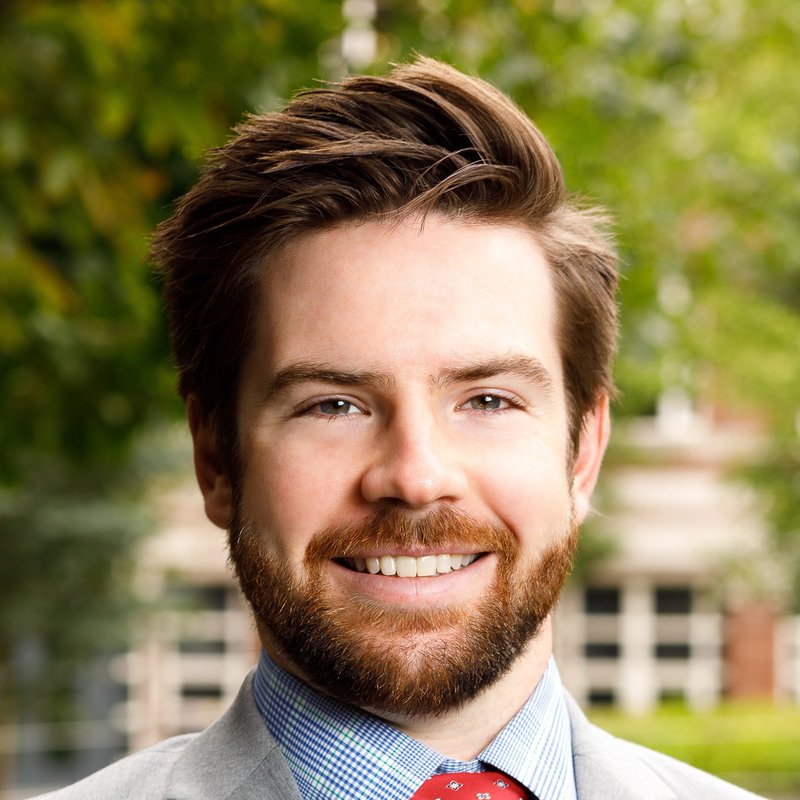
Patrick Behrer is an Economist in the Development Economics Research Group at the World Bank. His research focuses on the economic causes and consequences of air pollution and climate change around the world, with a particular focus on how to encourage adaptation to climate change and air pollution exposure.
He holds a PhD in Public Policy from Harvard University. Prior to joining the World Bank he was a postdoctoral fellow at Stanford's Center on Food Security and the Environment and a Fulbright Fellow in New Zealand.

Hwiyoung Lee is a PhD candidate at the University of Pennsylvania School of Social Policy & Practice. His research focuses on the impact of temperature on labor markets in South Korea.

Husel is a PhD candidate at the University of Pennsylvania School of Social Policy & Practice. His research focuses on climate adaptation and social resilience in the Global South. He studies how environmental shocks influence social cohesion and social welfare by using large-scale panel data, demographic surveys, and satellite-based climate indicators.

Angelo dos Santos is a Postdoctoral Fellow at the University of Pennsylvania and Scientific Production Coordinator for the DZC project. He is an applied microeconomist working on development and environmental economics.
His research addresses issues such as deforestation and air pollution, with the aim of developing effective policies to mitigate these challenges. He received his PhD from the University of Houston.

Katherine is a junior studying Finance and Statistics at the Wharton School of the University of Pennsylvania. She is interested in infrastructure investing and exploring how private capital can strengthen climate resilience and create social impact.
Updates from CCR — events, talks, media coverage, and our weekly seminar series — will be posted here soon.
For inquiries about research collaboration, policy partnerships, or joining the team.
Gifts to the Center for Climate Resilience support research that directly shapes policy for the communities most exposed to climate risk.
Member companies will meet with CCR researchers at convenings held under the Chatham House Rule, where findings and open questions can be discussed candidly across sectors. We're finalizing the structure of the program over the coming months. If your organization is interested in taking part as we build it, we'd love to hear from you.